
Business Interruption Losses: Making an Insurance Claim
Mar 25, 2020
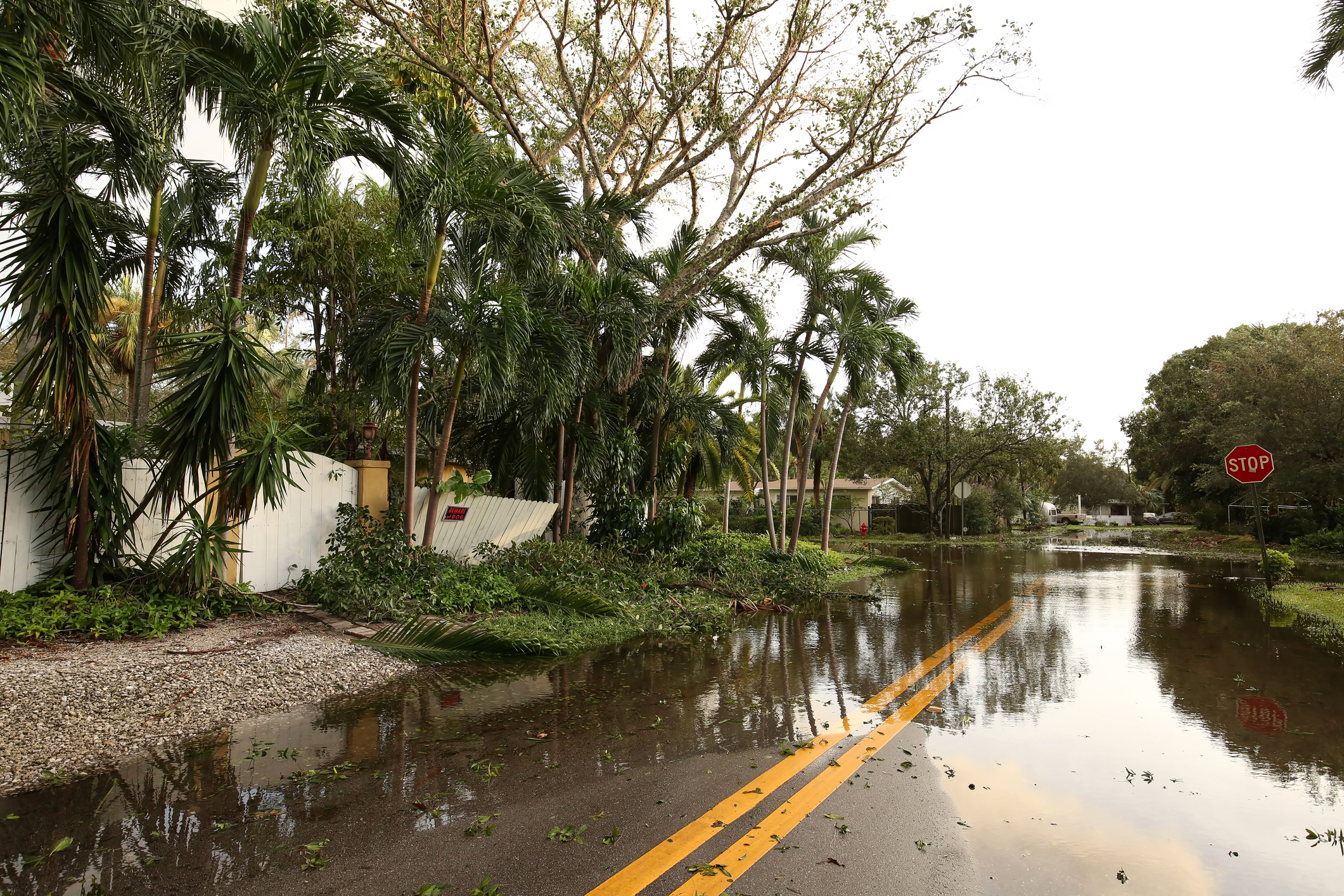
The inability of businesses to operate as usual during a disaster can create what are known as business interruption losses. These losses consist of both current and future lost business income from the necessary suspension or reduction of business operations caused by an event that damages business property or restricts or limits access to it.
Businesses generally attempt to mitigate or limit these types of losses through insurance coverage. The extent or limits of coverage will vary with the business policy. Frequently, the terms and conditions of a business interruption policy do not explicitly define what may constitute a loss or how that loss is calculated. Even though coverage may not be assured, if a policy exists, a business owner should contact the carrier and initiate a claim. There are filing time requirements, so prompt notification to carriers is essential.
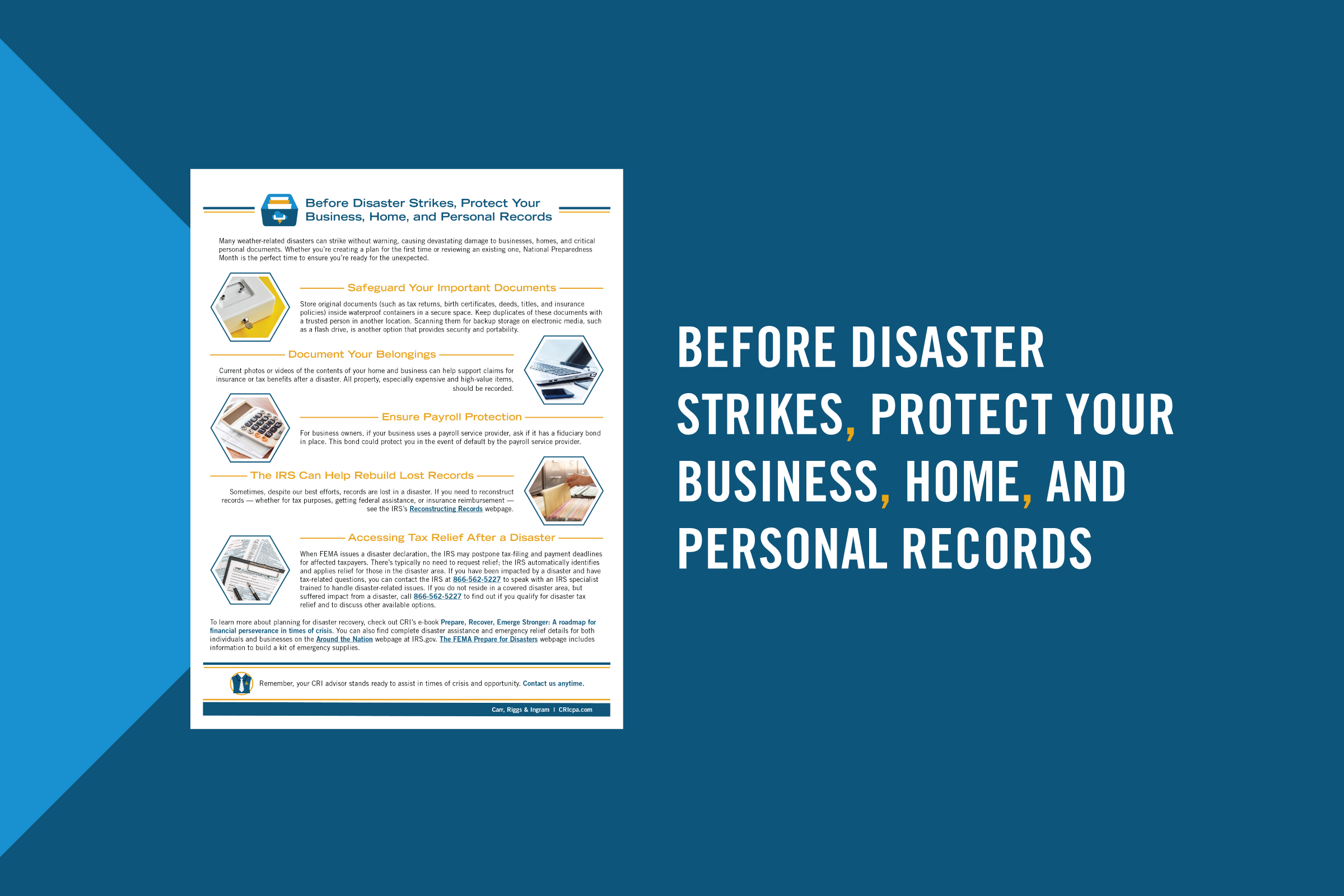
By notifying your insurance carriers, you begin the claims process. When this occurs, specific documentation is required to support the claim. This documentation will include the following:
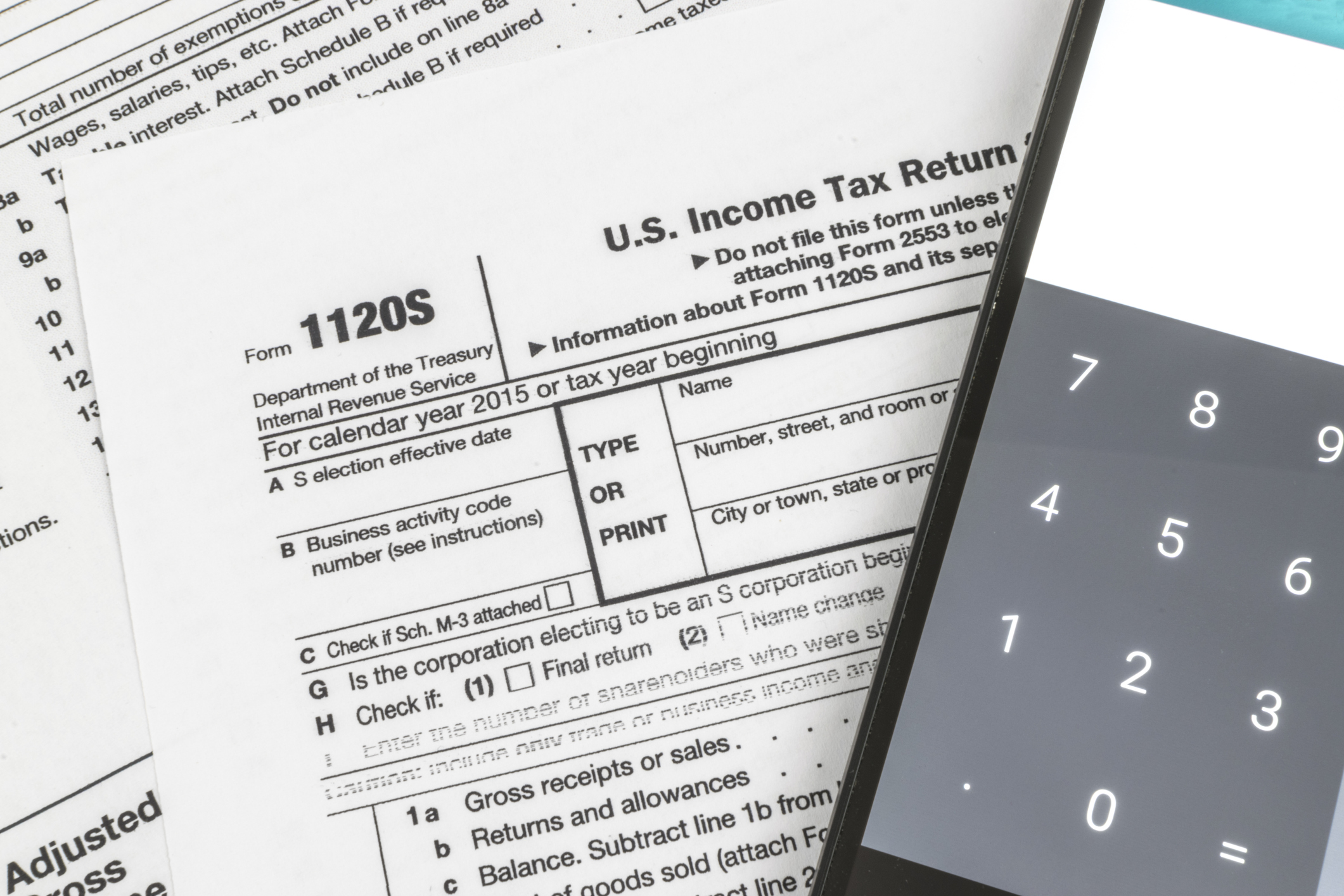
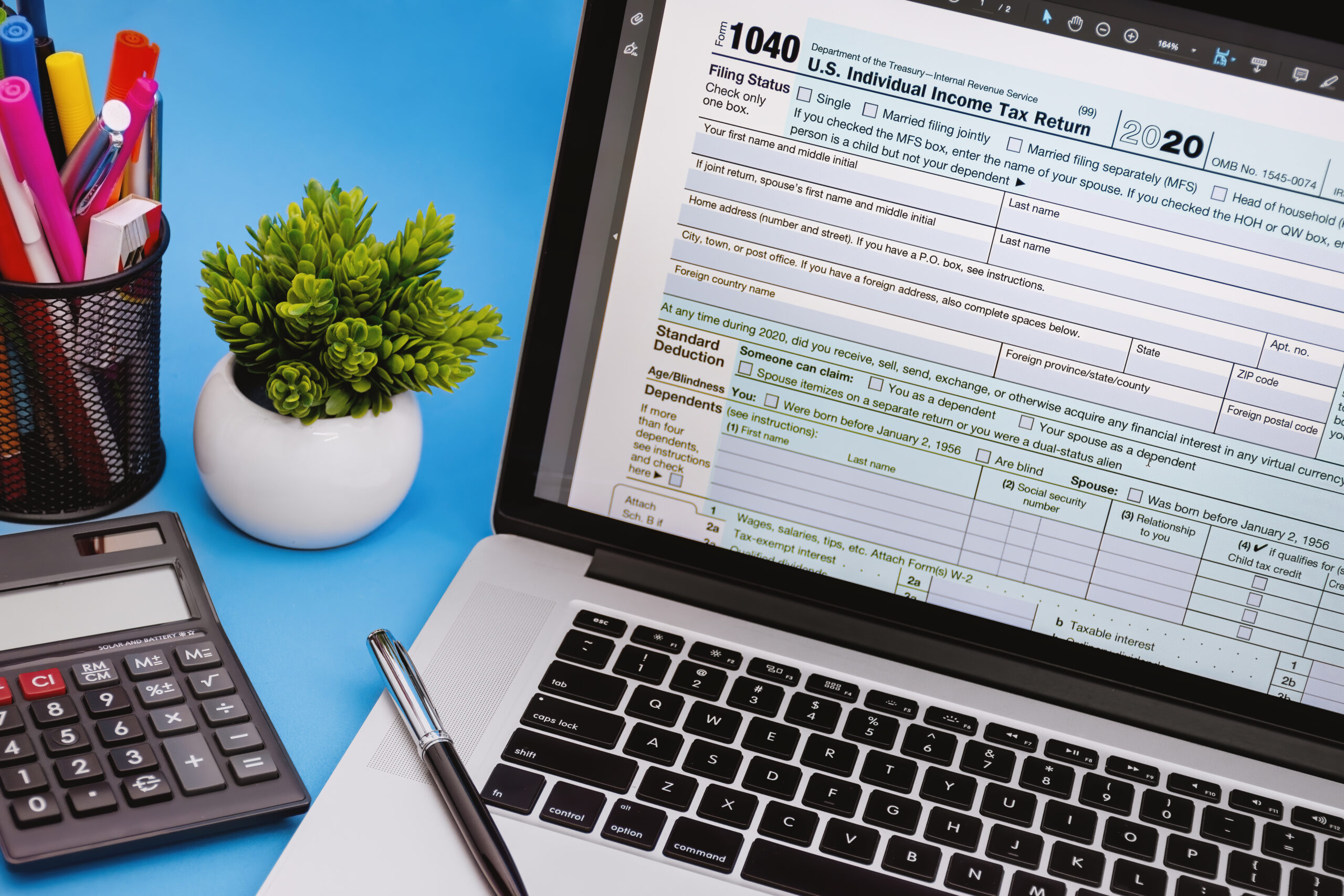
- Income tax returns for the last two to three years.
- Monthly profit and loss statements for the last two to three years.
- Current monthly profit and loss statements.
- Monthly profit and loss statements throughout the business interruption.
- Monthly payroll records for the last two to three years and throughout the business interruption.
- Other supporting documentation for delayed losses or losses not reflected on profit and loss statements.
It is important to detail the business interruption losses and the type of losses at the initial stage of the claim by documenting the effect of the loss on your business beyond lost profits. For example, hotels, vacation rentals, and travel agencies may experience cancellations of future stays in addition to losing current revenue and profit. For medical practices, a business interruption may also affect the collectability of their receivables.
You should also document and inform the insurance carrier of any unusual historical events (e.g., renovations, previous losses due to prior disasters) that would cause an inaccurate portrayal of your losses. Data from third parties may also help document these types of unusual events and support your claim for higher losses.
Your advisor will be critical in the calculation of your business’s interruption loss. They can help gather data, complete insurance forms, and interpret the results of your financial information. And they can demonstrate your losses using tried and proven formulas and models to arrive at an accurate loss amount to present to your insurance carrier.
If you’ve experienced a business loss due to a disaster, reach out to a CRI advisor to jump-start the process and create a plan for filing a claim.