
Prepare Your Organization for a Successful Single Audit*
- Contributors
- April Shuping
- Lorri Kidder
Feb 11, 2026
Every year, government agencies and public sector organizations expending significant federal grant funding face the same challenge: Navigating the complex Single Audit* requirements. Yet many leaders don’t know exactly what it takes to “pass” this annual exam. That confusion can result in compliance failures that may jeopardize funding, trigger corrective action plans, and damage your organization’s reputation.
The good news? Understanding your Single Audit responsibilities up front can transform this annual requirement from a dreaded ordeal into a manageable process that protects your funding and strengthens your operations.
Single Audit Basics
If your organization expends significant federal grant funds, you’re probably familiar with the requirement to undergo an annual Single Audit. It’s a fundamental responsibility for state and local governments, nonprofit organizations, higher education institutions, and certain other entities that spend $1 million or more in federal grants during their fiscal year.
Single Audits are designed to create a standardized process of measuring compliance with rules related to the administration of federal grant funds. These comprehensive internal control and compliance audits involve a rigorous review of financial statements as well as an assessment of how closely the organization meets its obligations as a recipient of grants and certain other federal funding.
Due nine months after the fiscal year ends, the Single Audit must be performed by an independent external auditor and is generally performed in conjunction with a financial statement audit. Auditors follow a prescribed set of steps to select the grants for examination based on an accurate and complete list of grant expenditures for the fiscal year which you will need to provide as a preliminary step in the process.
Your Reporting Responsibilities
As an auditee, you’ll need to complete detailed Schedule of Expenditures of Federal Awards (SEFA) reporting for each federal award or other form of assistance. This reporting includes:
- Official grant names, contract numbers, Assistance Listing Numbers (ALNs)
- Grant clusters, if applicable
- Granting agencies (and pass-through agencies, if applicable)
- Total expenditures broken down by ALN (and cluster, if applicable)
- Amounts distributed to subrecipients
It’s important to be careful and thorough as you draft the SEFA. Your auditors use the draft reports to select the major programs (grants) that they’ll focus on during the audit, and subsequent changes to these reports will often increase the costs and time required to complete the single audit. Common SEFA pitfalls to watch for include:
- Overlooking grants, such as non-cash awards and grants administered through decentralized departments.
- Incorrect grant amounts, which can arise in dynamic grant situations such as those associated with disaster relief, grant matching, accounts payable cutoff dates, prior-year expenditures, and retainage amounts.
- Confusing documentation can occur if you receive pass-through grants that lack ALN and direct grantor identification.
Audit Requirements for Major Programs
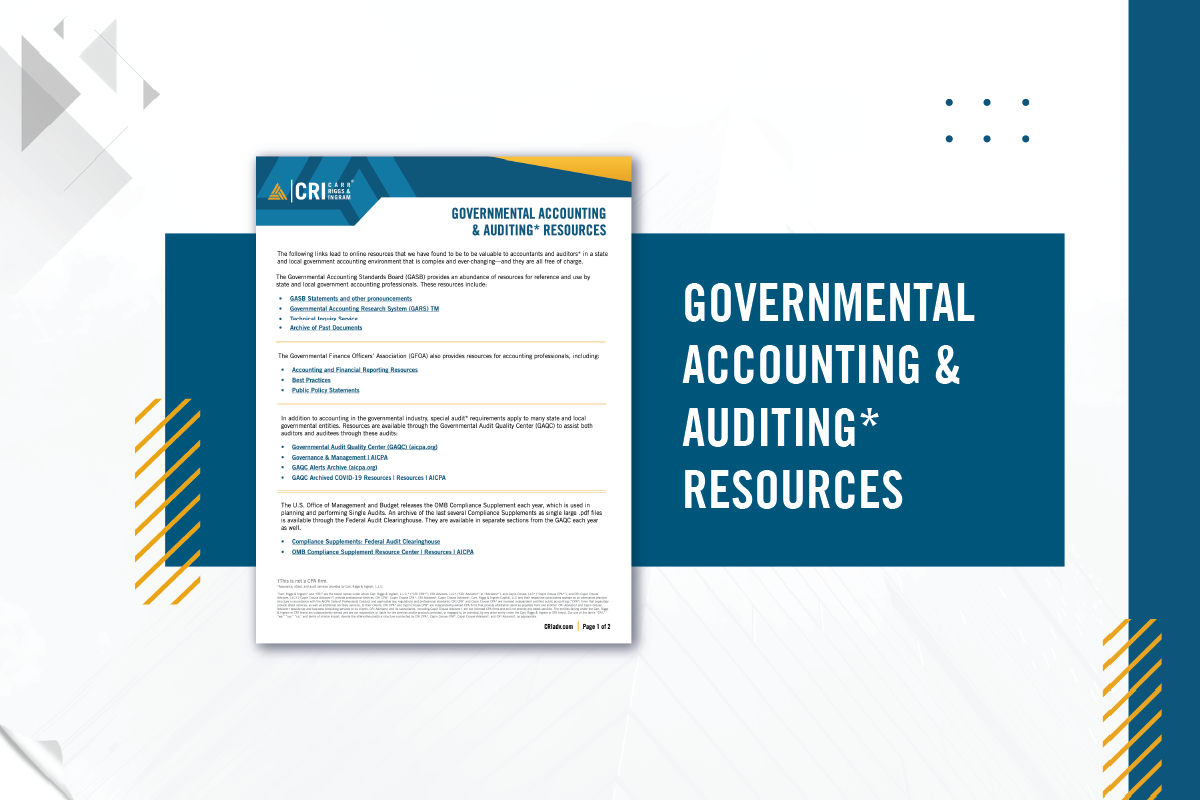
Your external audit team is required to follow Uniform Guidance to assess and document your internal controls over compliance in addition to your actual compliance with grant requirements. It’s a rigorous process that demands substantial documentation, but there’s a resource that is not well known and that can help you understand and prepare for your Single Audit: the Office of Management and Budget (OMB)’s Compliance Supplement is published annually and is available for free.
The supplement defines 12 compliance requirements, some of which have multiple sub-requirements. Not all of these requirements are applicable to every grant. For each requirement that applies, the supplement provides explanations, audit objectives, suggested audit procedures, and additional guidance to help you and your auditors.
The supplement has general compliance guidelines for all federal grants in Part Three, but the most useful information is in Part Four which details the applicable compliance requirements individually for hundreds of grants and is organized by ALN. This section even provides you with the specific compliance requirements your auditors will be required to address in their audit, giving you the opportunity to “preaudit” your grant compliance.
Don’t think of studying the supplement as “cheating,” because it’s quite the opposite — relying on this helpful resource is the best way to prepare for a successful audit!
Danger Zones for Major Programs
Certain compliance requirements have a higher frequency of findings. Pay special attention to these problematic areas and be sure you have adequate documentation of internal controls over each one:
- Cash Management — Many cost-reimbursement grants require disbursement of expenditures to occur before requesting grant reimbursement; some advance-funded grants require earned interest to be reported as program income.
- Equipment and Real Property Management — Long-term tracking of equipment and other capital items made with grant funds is often required.
- Matching, Level of Effort, Earmarking — Internal control documentation showing how level of effort is reviewed is often missing.
- Procurement, Suspension, Debarment — Some grants and agencies (such as the Federal Emergency Management Agency) have special requirements, and contracts may not have all the required clauses; smaller grantees may not have compliant purchasing policies; local procurement policies may not be federally allowed.
- Reporting — Common noncompliance issues involve timely reporting and failure to retain documentation showing a reviewer has checked the reports for accuracy.
- Subrecipient Monitoring — Differentiating between subrecipient and vendor relationships is critical but complicated; responsibility for ensuring compliance with all grant requirements remains with the grantee, including the risk of recapture of funds misspent by the subrecipient.
- Special Tests and Provisions — Multiple requirements add complexity; it may be harder to identify all the separate requirements for grants that don’t appear in the compliance supplement.
Single Audit Best Practices
Accuracy is essential for your SEFA. The following best practices can help you fulfill your audit and reporting obligations:
- Start early. Taking these steps throughout the year can help ease the process long before it’s time to compile your data.
- Implement written policies and procedures for grant applications, acceptance, amendment, and closeout, as well as entity-wide grant tracking responsibilities and processes. Maintain communication with accounting and finance throughout the process.
- Make it easy to identify grant activity in the general ledger by separating account elements such as fund, unit, project, or program codes for each grant.
- Create, assess, and document internal controls over the grant tracking process and compliance for each grant.
- Update often. Performing periodic checks allows you to identify potential trouble spots and take corrective action before they become pervasive, time-consuming problems.
- Reconcile grant tracking reports to grant general ledger balances and grant module reports (if appropriate) regularly throughout the year.
- Research and identify any variances you discover during your reviews.
- Document internal controls that are relevant to the reconciliation process, especially the review of reconciliations by separate individuals.
- Triple-check at the close of the fiscal year. Before finalizing your SEFA, conduct a thorough review to ensure that all data is current, complete, and correct.
- Clearly communicate the importance of the cutoff for grant expenditures to departments and vendors.
- Reconcile revenue and expenditures to general ledger balances.
- Compare your draft to prior-year SEFA and ensure you understand significant changes from prior year.
- Identify variances that persist and research their sources.
- Ask your auditors. Whenever you face complex issues, have questions, or just want confirmation that you’re providing the right data in the right way, your auditors are the best source of information. They’re intimately familiar with the process and will be happy to clarify any issues that create uncertainty — large or small. Don’t wait; your auditors would much rather help you resolve questions and concerns than have you struggle with the consequences of improper or incomplete reporting.
Improve Your Audit and Reporting Experience
Completing the Single Audit is an essential part of your job as a government or government-adjacent organization that receives federal funds. While the process can be intimidating, having the right information and adhering to best practices will dramatically impact your audit experience. If you have questions or need guidance, reach out to your CRI advisor. We can help minimize disruption and improve the audit experience.