
What the $50B Rural Health Transformation Program Means for States and Rural Providers
- Contributor
- Jose R. Aponte III
Mar 4, 2026
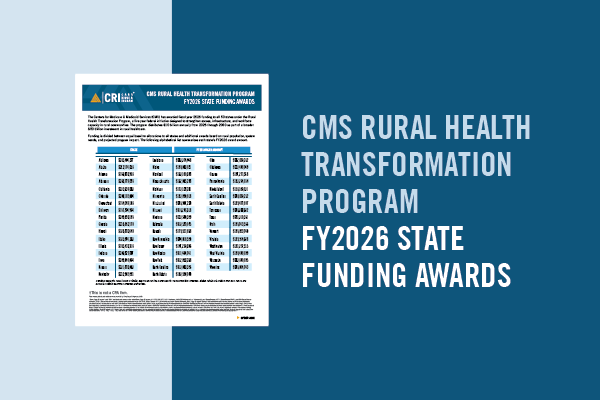
The Centers for Medicare & Medicaid Services (CMS) has approved awards for all 50 states through its new Rural Health Transformation Program, a five-year, $50 billion initiative to improve access, infrastructure, and workforce capacity in rural communities. For rural healthcare organizations, the program presents both opportunities and uncertainties, especially regarding how states will allocate and oversee the funds. Understanding the program’s structure and implications is essential for effective planning.
A Nationwide Funding Commitment with State-Level Control
The program will distribute $10 billion annually from 2026 to 2030, with all states receiving funding. Half of each year’s allocation is divided equally among states, while the other half is awarded based on rural population, proposed initiatives, and projected impact.
States, not CMS, control how funds are allocated. While the program aims to expand access, modernize facilities, strengthen workforce pipelines, and support new care models, states are not required to direct funds to rural hospitals or providers. This level of discretion granted to the states may lead to substantial differences in funding received by a providers when compared to a similar provider in a different state, or even providers of similar types within an individual state.
Oversight and Accountability Mechanisms Are Evolving
CMS will assign a project officer to each state and require annual progress reports starting in 2026. An annual rural health summit will also share best practices and program outcomes.
Although funding is not directly performance-based, these reporting requirements indicate greater federal oversight and an expectation that states show measurable progress in rural health outcomes. Indeed, recent correspondence from leadership of CMS has indicated that outcomes and sustainability will be key to future state allotments under the program.
A Complex Funding Backdrop for Rural Healthcare
The Rural Health Transformation Program coincides with broader federal policy changes, including projected Medicaid reductions that will affect funding to rural healthcare providers. Rural providers now face both new federal investment and intensifying financial pressures.
Healthcare organizations should see this as both an opportunity and a challenge. States may focus on infrastructure, workforce recruitment, telehealth, alternative payment models – or, more likely, some combination of these efforts. Providers who proactively assess readiness and participate in planning discussions will be better positioned to benefit from available funding.
Strategic Considerations for Healthcare Leaders
Given this fluid environment, hospitals and health systems serving rural communities should actively engage with state policymakers and funding administrators, while also coordinating with similar providers in their communities and states and their applicable trade associations and advisers. Providers that clearly communicate their needs and demonstrate readiness for scalable improvements are more likely to align with funding priorities.
Key areas to monitor include:
- State-level funding priorities and timelines
- Opportunities for infrastructure modernization
- Workforce development initiatives
- Emerging payment and care delivery models
- Compliance and reporting expectations
Positioning Your Organization for Rural Funding Opportunities
The impact of the Rural Health Transformation Program will depend on how well states implement local improvements and how well rural providers embrace change and adapt to the priorities of their state. Providers with questions about these changes or that need guidance on planning, compliance, or financial strategy should contact their CRI healthcare advisor. Providers that stay informed and actively engaged at the state level will be best positioned to navigate the evolving rural funding landscape.