
What Higher Education Institutions Need to Know About the One Big Beautiful Bill Act
- Contributor
- Chris Purnell
Jun 22, 2026
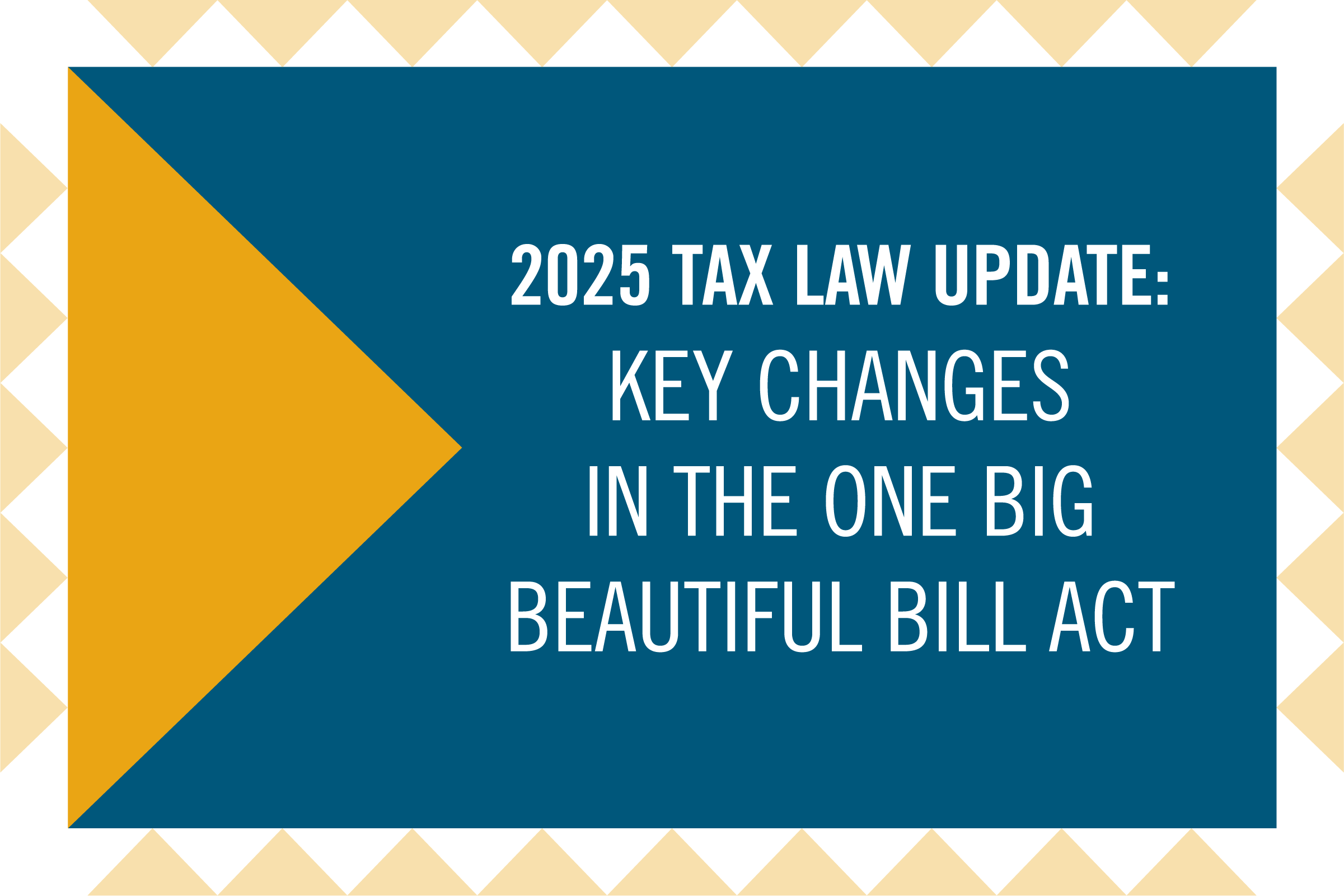
The One Big Beautiful Bill Act introduced changes that could impact higher education institutions’ approaches to student aid, financing, tax compliance, and program planning. While some provisions affect all tax-exempt organizations, several directly concern colleges and universities.
For institutional leaders, the immediate task is to determine which changes will impact operations, reporting, and strategic planning before critical effective dates. Although further details may be forthcoming in some areas, institutions should actively analyze how the law could shape affordability, enrollment forecasts, compliance tasks, and budget projections.
Student Financing Changes May Affect Affordability and Enrollment Planning
The law may change how students and families pay for higher education, which is crucial for institutions with many graduate, professional, part-time, or aid-dependent students.
Beginning July 1, 2026, certain Pell Grant eligibility rules are scheduled to change. Students whose full cost of attendance is covered by non-federal grant aid may no longer qualify for Pell Grant funding, and additional income considerations may affect eligibility calculations. The law also creates Workforce Pell Grants for certain short-term training programs, which may create new opportunities for institutions with eligible programs tied to workforce needs.
Federal loan changes may also influence affordability. Parent PLUS loans will be subject to new annual and aggregate limits, and Graduate PLUS loans will no longer be available for new borrowers after the effective date. New borrowing caps for graduate and professional students may require institutions to reconsider how students finance higher-cost programs.
For higher education leaders, the challenge is not just maintaining students’ eligibility for aid. Institutions must analyze how these changes could influence enrollment patterns, program demand, student advising, pricing strategy, and communications with families. The finance and enrollment teams should jointly review where student financial assumptions require revision.
Tax and Compliance Considerations May Require Review
The law also contains tax measures that could influence certain institutions, students, families, and donors. While not every institution will experience the same impact, higher education leaders must clarify which tax and compliance policies require deeper scrutiny.
One key area is the revised excise tax on endowment income for certain private colleges and universities. Beginning in 2026, the tax applies through a graduated structure based on student-adjusted endowment levels. Because the tax generally applies only to institutions with large endowments relative to their student populations, it is expected to affect a limited number of colleges and universities. Institutions that may be subject to the tax should evaluate how endowment assets, student counts, net investment income, and related reporting processes are calculated.
The law also modifies certain education-related tax provisions, including changes involving 529 plans and education credits. These provisions may be more directly relevant to students and families, but institutions may still receive questions from those trying to understand how education costs and credentialing-related expenses are treated.
For institutional finance and tax teams, swift identification of applicable provisions is essential, as is the preparation of updated guidance for student-facing teams. Even when not responsible for personal tax advice, institutions must be ready to respond immediately and direct students, families, and donors to the appropriate resources.
Program Accountability May Become a Strategic Planning Issue
The law also introduces new accountability measures tied to graduate earnings. Under these provisions, certain programs may be evaluated based on whether graduates meet specified earnings benchmarks after completion. If a program fails the test in two out of three consecutive years, the institution could lose federal student loan eligibility for that program.
This presents a strategic challenge for institutional leaders. Program success, workforce alignment, outcomes data, and graduate earnings metrics will become increasingly crucial to financial and academic decision-making. Programs with high costs, lower initial earnings, or small enrollments may demand additional analysis.
Institutions should consider how they currently evaluate program outcomes and whether existing data is strong enough to support future planning. Academic leadership, finance, compliance, institutional research, and career services may need to work together to better understand which programs could face greater scrutiny and what steps may help demonstrate value to students and stakeholders.
Cross-Functional Planning Will Be Important
Because the law touches several areas of higher education operations, institutions should pursue a unified review rather than addressing each change in isolation. Adjustments to student aid, loan caps, endowment tax, and accountability rules may touch distinct departments, yet their influence is interconnected.
As effective dates approach, institutions should begin evaluating:
- Which provisions may apply directly to the institution
- What data may be needed to support planning or compliance
- Which policies, processes, or communications may require updates
- How leadership should communicate potential impacts to students, families, donors, boards, and internal teams
A cross-functional approach allows institutions to avoid compartmentalizing each change as a discrete compliance requirement. The broader objective is to understand how the law could affect the financial structure, program offerings, affordability initiatives, and institutional planning.
Preparing for What Comes Next
The One Big Beautiful Bill Act may have wide-reaching implications for higher education institutions, even as certain details remain unresolved. Higher education leaders should use this period to assess how the law could impact financial strategy, compliance obligations, and strategic planning.
Contact your CRI advisor to discuss how these changes may apply to your institution and what steps may help support a more coordinated response. Taking a proactive approach now can help reduce surprises and better position your institution for the changing higher education landscape.