
The One Big Beautiful Bill Act and Medical Practices: Preparing for Impact Amid Uncertainty
- Contributors
- Bryan Hall
- Georgina Perry
Sep 7, 2026
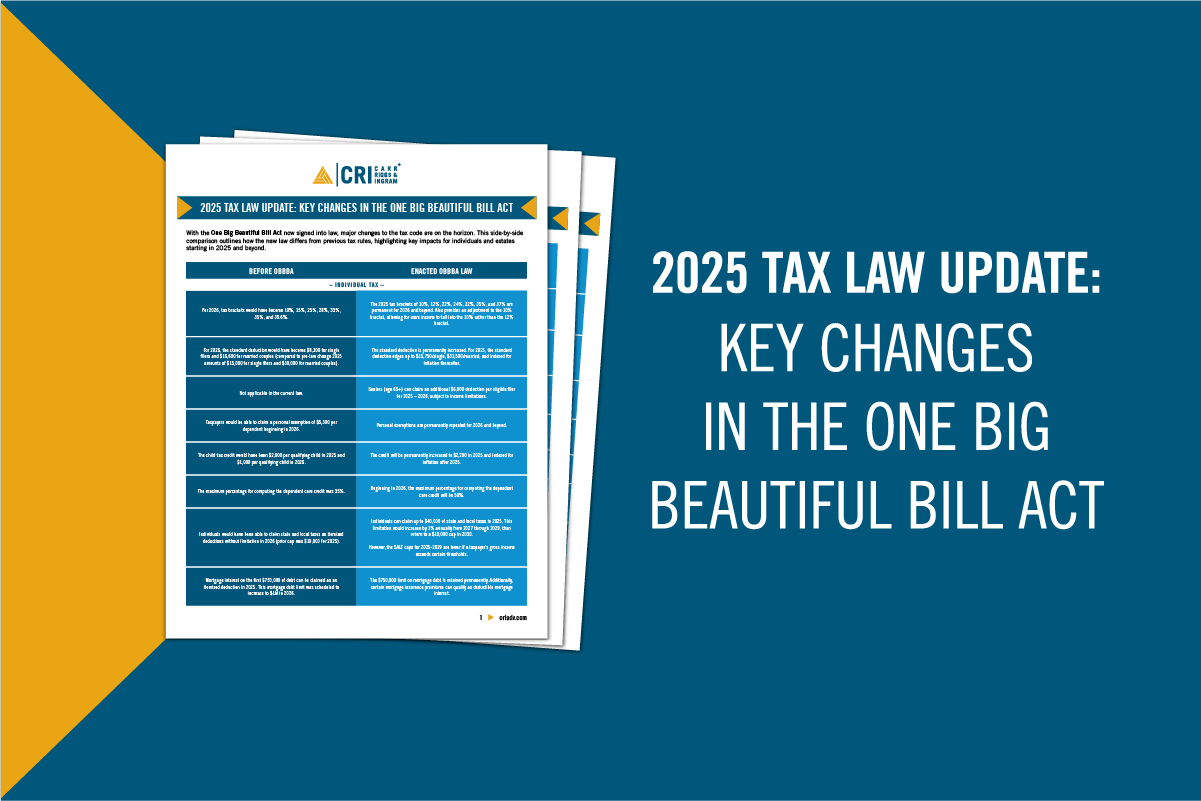
The One Big Beautiful Bill Act (OBBBA) represents the largest tax reform since the 2017 Tax Cuts and Jobs Act, and it contains significant financial and operational consequences for medical practices.
While the legislation establishes the federal framework, much of the real-world impact will be determined by how each state implements its authority and when federal funding phases in. Unknowns remain, including:
- The magnitude of net reimbursement changes by state
- How managed care organizations will adjust contract terms
- The timing and structure of final funding flows
This uncertainty makes proactive planning essential. Below, we outline what medical practices need to know now and highlight planning strategies to help mitigate risk and uncover opportunities.
Medicare Payment Adjustments
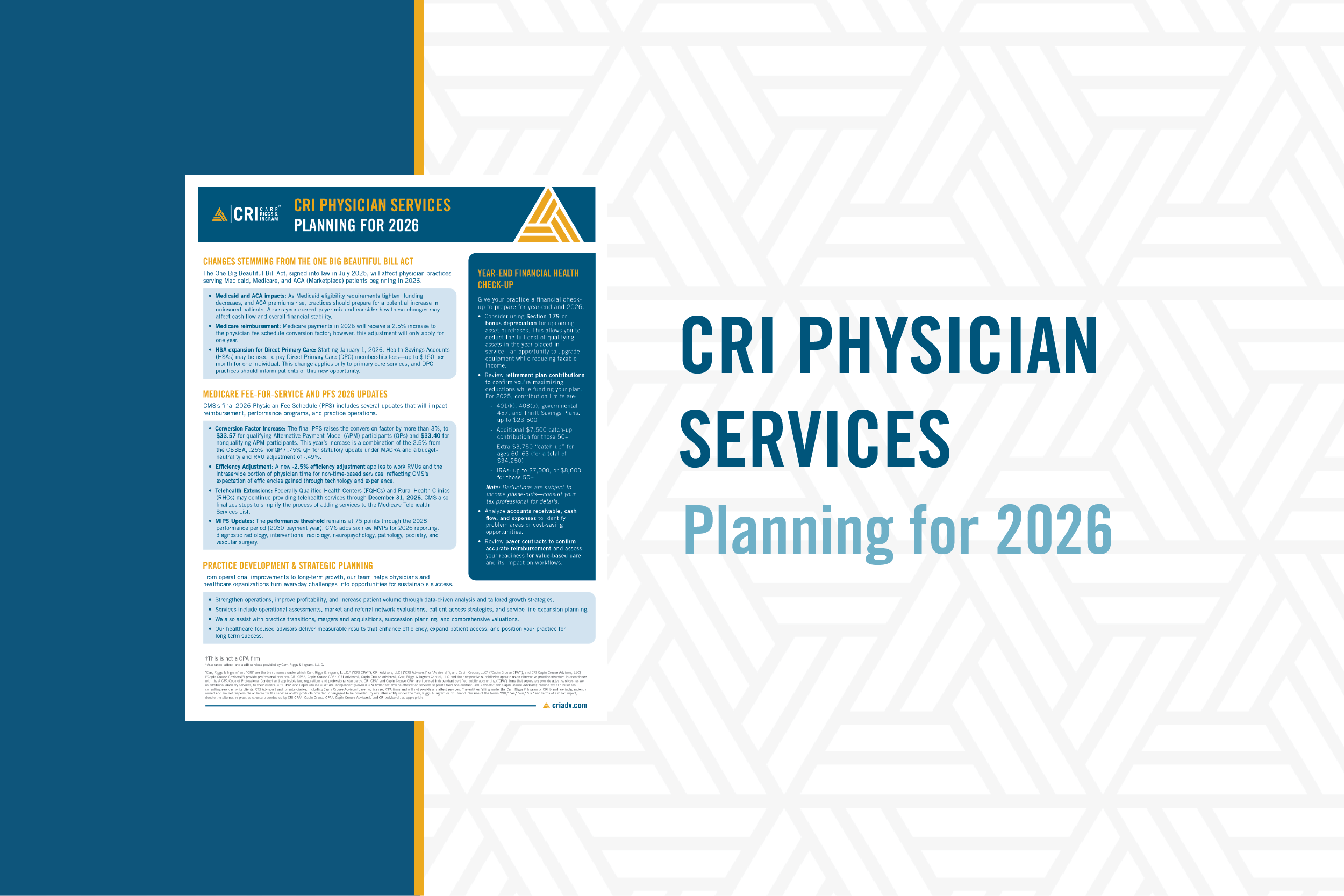
While the 2026 Medicare Physician Fee Schedule reports an increase of more than 3% from the prior year, it’s important to note that this includes:
- A 2.5% increase mandated under the OBBBA increase
- An “efficiency adjustment” that reduces some work relative value units (wRVUs) by approximately 2.5% for many non-time-based services
The 2.5% increase under the OBBBA applies only to 2026. As a result, practices should view this as temporary relief rather than a permanent solution to declining reimbursements. Understanding how reimbursement will change in 2026 and planning for 2027 and beyond will be critical.
Medicaid Eligibility Reductions
Beginning January 1, 2026, the OBBBA restricts Medicare eligibility to:
- U.S. citizens and nationals
- Lawful permanent residents (green card holders)
- Cuban and Haitian entrants
- Individuals under Compacts of Free Association (COFA citizens)
Refugees, asylum-seekers, and other lawfully present immigrants will not have access to Medicaid. This includes existing beneficiaries, who may lose coverage after an 18-month grace period.
This change will increase the number of self-pay or underinsured older patients for many practices, particularly in states with large immigrant or refugee populations.
Medicaid Funding Decreases and New Administrative Challenges
The OBBBA includes approximately $1 trillion in Medicaid cuts over 10 years, with a focus on rolling back spending associated with the ACA Medicaid expansion. Forty states expanded Medicaid coverage to able-bodied adults aged 19 to 64 with household incomes up to 138% of the federal poverty level.
In addition, the OBBBA introduces significant administrative requirements, primarily for the Medicaid expansion population, as shown in the table below. (“Other enrollees” include pregnant women, parents or legal guardians of children under age 1, and individuals with certain disabilities.)
| Change | Effective Date | Impact on Expansion Population | Impact on All Other Enrollees |
|---|---|---|---|
| Increased frequence of eligibility redeterminations | January 1, 2027 | Individuals will need to complete eligibility redeterminations every six months. | Individuals may be revalidated every 12 months. |
| Retroactive coverage window reduced | January 1, 2027 | Coverage is retroactive to one month prior to application. | Coverage is retroactive to two months prior to application; if the patient is under 21 or pregnant, retroactive coverage remains three months. |
| Cost-sharing requirements | October 1, 2028 | Greater than $0 but maxed at $35 per item or service; cap at family level of 5% family’s income. Some exemptions apply, including for primary care and substance use disorders services. | Does not apply. |
| Work requirements for enrollment | January 1, 2027 (but states may opt to start earlier with a waiver) | Able-bodied adults aged 19 to 64 must complete 80 hours of work per month with semi-annual re-verification. | Does not apply. |
Even when patients remain eligible, increased documentation requirements, limited access to technology, complex exemption rules, and other issues increase the likelihood of coverage lapses, retroactive denials, and delayed payments, creating challenges for patients and billing staff.
Changes to State Medicaid Programs and Payments
Many states offer Medicaid Savings Programs (MSPs) to help low-income beneficiaries by paying Medicaid Part A and Part B premiums, and some deductibles and co-insurance. The OBBBA pauses implementation of a rule that would have simplified MSP enrollment. As a result, states will continue to use separate applications for Medicaid and MSPs through September 30, 2034, when this policy expires.
Many states also use state-directed payments (SDPs) to bring Medicaid payments closer to Medicare levels. Effective July 4, 2025, these are capped under the OBBBA as follows:
- Expansion states must freeze current or new SDP rates at 100% of Medicare rates
- Non-expansion states must limit new SPD rates to 110% of Medicare rates
- Rates that differ from these caps are approved through 2027, but must be reduced by 10% each year until they reach the state’s required maximum
Practices and hospitals that rely on enhanced Medicaid payments should prepare for multi-year revenue compression as these changes phase in.
Potential Opportunities: Rural Health Transformation Program and Tax Planning
The OBBBA doesn’t just bring challenges, however. It also brings potential opportunities for medical practices. This includes the Rural Health Transformation Program (RHTP), which was established to help states and providers manage the impact of the healthcare funding reductions and new eligibility provisions.
The RHTP allocates $50 billion over five years starting in 2026. Half the funds are distributed equally among states with approved applications. The rest is distributed by the Centers for Medicare & Medicaid Services based on certain criteria.
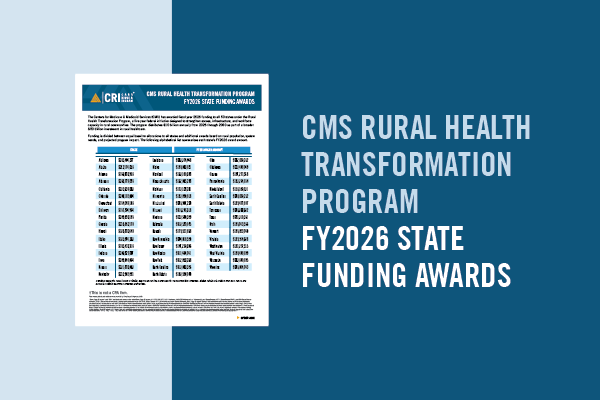
Learn more about the program's key elements and what they mean for states and rural providers, and see the 2026 RHTP funding allocations by state.
The OBBBA also delivers meaningful tax benefits for physician owners, including:
- 20% qualified business income (QBI) deduction made permanent
- Qualified Opportunity Zones made permanent – provide special tax incentives for investments in designated areas
- Full bonus depreciation (Section 179) restored, with higher limits
- Expanded employer‑provided child care credit
- Enhanced employer‑paid family and medical leave credit
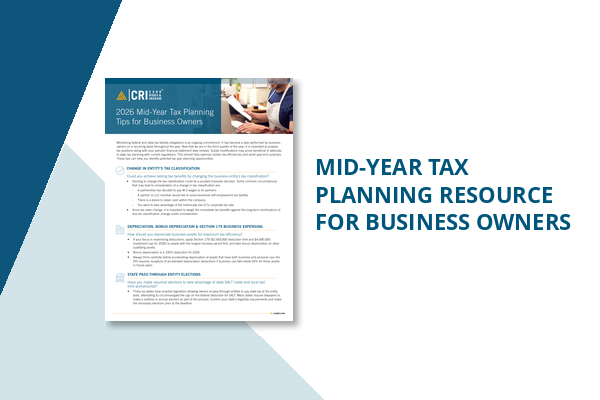
These provisions can improve cash flow, reduce tax liability, and support workforce retention. Coordinate them carefully with practice structure and compensation planning.
Positioning Your Practice for Resilience
As federal guidance is finalized and funding tranches are released, clearer financial signals will emerge. Until then, the most reliable approach is preparation and proactive strategic planning.
Consider these key action steps:
- Confirm that you are maximizing all incentives and avoiding penalties from the Merit-based Incentive Payment System and commercial payers
- Maximize commercial payments—review fee schedules, renegotiate contracts, and consider value-based payment contracts
- Consider training staff to provide enrollment assistance to help identify patients eligible for MSPs and understand Medicaid enrollment and eligibility
- Consider joining an accountable care organization or other network to share risk and reduce revenue volatility
- Consider cash-pay services (read insurance contracts carefully to ensure you aren’t breaking the agreement) and value-based payment models and incentives
- Take advantage of available tax planning opportunities
The provisions in the OBBBA are not a single event for medical practices but rather a rolling, state-driven transition. Practices that understand their payer mix, adapt to new reimbursement realities, and proactively plan will be better positioned to remain financially stable amid the coming changes.
Questions? Unsure about what steps to take next? Contact your CRI advisor to see how we can help you plan for these changes.