How One Construction Project Can Unlock Four Tax Incentives
- Contributors
- Bryan Cherry
- Todd Giustiniano
Aug 19, 2026
What if a single construction project could generate multiple tax benefits, without changing the scope of work?
Many companies evaluate construction tax planning strategies separately, sometimes after a project is complete. But when Section 179D deductions, the research and development (R&D) tax credit, cost segregation, and repair regulations are considered together, a single project may qualify for several tax incentives.
This can increase cash flow, reduce taxable income, and turn everyday construction projects into tax-saving opportunities.
One Project, Multiple Potential Benefits
Many construction activities naturally provide multiple tax incentives. A commercial or public-sector project, for example, may include:
- Energy-efficient design (179D)
- Problem-solving during design-build execution (R&D)
- Components eligible for shorter depreciable lives (cost segregation)
- Costs that may be expensed rather than capitalized (repair regulations)
These opportunities aren’t mutually exclusive, but they are interconnected.
As an example, consider a project to construct a municipal office building. The project includes high-efficiency HVAC and lighting systems, value-engineering decisions during construction, and specialized site and electrical improvements. With the right approach:
- Project activities could support an R&D credit
- The building could undergo a cost segregation study to accelerate depreciation
- Certain repairs or retrofits could qualify for immediate expensing under repair regulations
- The designer or contractor could qualify for a 179D deduction through allocation
With effective planning, several tax benefits can be applied in a unified strategy.
How the Four Incentives Work Together
Energy Efficiency (179D)
Section 179D of the Internal Revenue Code provides a deduction for newly constructed energy-efficient buildings or major retrofits or upgrades, focusing on interior lighting, HVAC and hot water systems, and the building envelope.
For construction companies, this is especially relevant when working on government and nonprofit-owned buildings. While this deduction is primarily claimed by business owners, since government and tax-exempt entities do not pay income tax, they can allocate the right to claim a 179D deduction to designers or contractors.
It’s important to note the timing of 179D deductions, however. Under a change included in the One Big Beautiful Bill Act (OBBBA), 179D deductions are not available for property with construction beginning after June 30, 2026.
Innovation (R&D Tax Credit)
Many contractors underestimate how often their work qualifies for the R&D tax credit, which applies to activities that involve developing, designing, or improving products, processes, formulas, or software.
If your team is solving technical challenges, such as by adjusting designs, testing materials, or improving construction methods, you may be performing qualifying activities. Examples include:
- Developing alternative construction approaches due to site or material constraints
- Solving engineering or structural challenges
- Incorporating prefabrication techniques
To qualify, you must meet certain gross receipts tests and perform research activities that meet four specific criteria. You can learn more about the R&D tax credit, including what qualifies, in our overview of R&D tax incentives.
Faster Write-Offs (Cost Segregation)
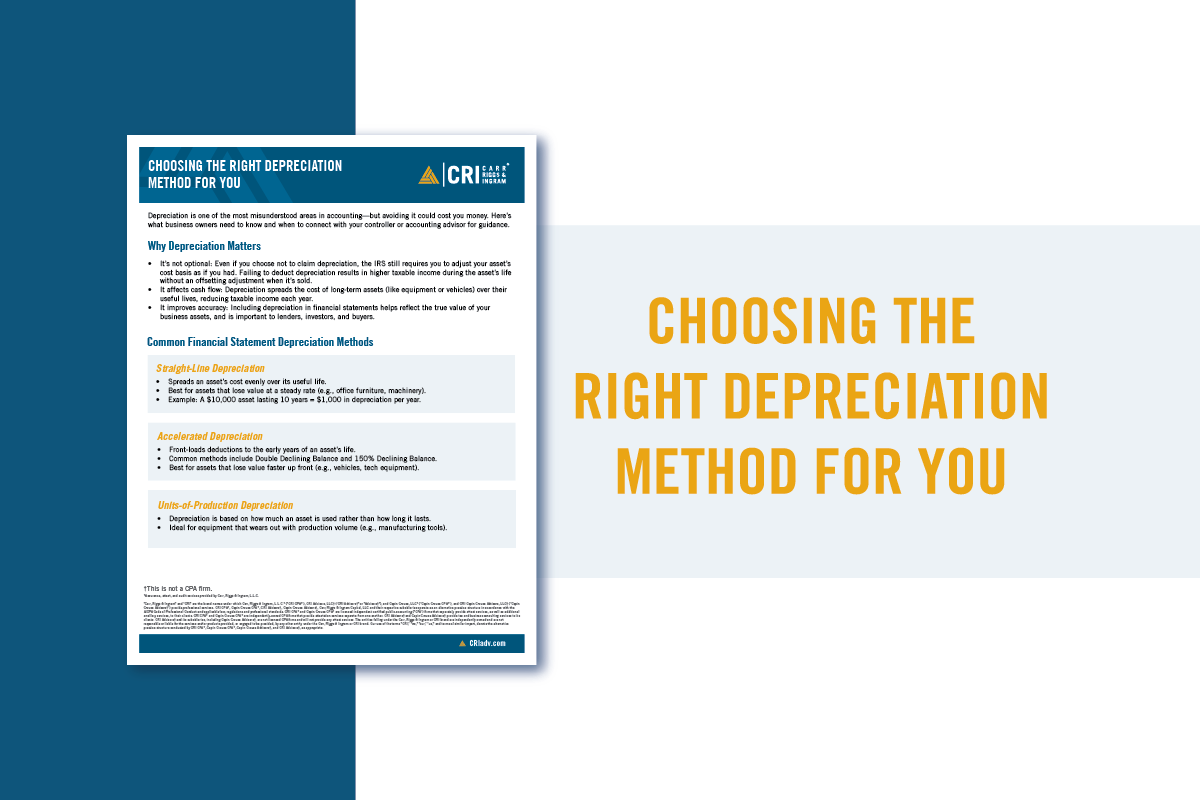
Cost segregation involves reclassifying some of your building costs into non-building components such as equipment, fixtures, or improvements. Non-building components can be depreciated over a period of five, seven, or 15 years, compared to 39 years for nonresidential buildings.
Eligible components may include:
- Specialized utilities, such as plumbing connections or electrical outlets that tied to specific equipment
- Flooring, countertops, cabinetry, and specialty lighting
- Site improvements such as paving, sidewalks, or landscaping
When paired with current bonus depreciation provisions, cost segregation can significantly improve near-term cash flow, making it a core element of effective construction tax planning.
Expense Deductions (Repair Regulations)
The IRS’s repair regulations determine whether expenses for property repair and maintenance must be capitalized or can be expensed immediately. This is an important consideration for renovations, retrofits, and partial asset replacements.
Examples of construction expenses that might be deductible under the repair regulations include:
- Replacing a portion of a building system
- Routine maintenance activities
- Certain improvements that don’t rise to the level of capitalization
These deductions directly impact taxable income and often overlap with cost segregation classification.
Why Coordination Matters in Construction Tax Planning
These incentives don’t operate independently—their interaction directly affects the total tax benefit.
Consider All the Impacts
These tax strategies affect each other in several ways:
- Claiming a 179D deduction reduces the building’s depreciable basis, which directly impacts cost segregation outcomes.
- Decisions about whether to repair or capitalize impact eligibility for other benefits. Expensing costs reduces what’s available for depreciation but may increase immediate deductions.
- Cost segregation must reflect all adjustments, including 179D deductions and impacts from repair regulations, to ensure compliance and accuracy.
Avoid Double-Counting
You can benefit from multiple incentives on the same project, but not by claiming the same dollars twice. For example:
- Costs used for R&D credits may require adjustments before depreciation
- Costs expensed under the repair regulations are no longer depreciable
Strong documentation and coordination are essential to maximizing your value while maintaining compliance.
Timing Matters
Some strategies accelerate deductions now, while others provide credits or additional deductions. Planning during design and construction, rather than after completion, allows contractors to streamline their efforts and maximize the potential benefit.
Where Contractors Can Lose Value
Construction companies can miss out if they take a fragmented approach to these tax incentives. Common pitfalls include:
- Treating each incentive as a separate engagement
- Bringing in specialists too late in the project lifecycle
- Overlooking the 179D allocation opportunities on public-sector or nonprofit work
- Over-capitalizing costs that could be expenses
- Not aligning cost segregation with other tax strategies
Capturing these tax opportunities requires both technical tax expertise and a deep understanding of construction operations. An experienced provider who can evaluate the full picture can make a significant difference.
The Bottom Line: Integration Drives Value
By considering the four tax incentives outlined here together, construction companies can uncover opportunities they might otherwise have missed. The greatest advantage comes from using these incentives together as part of a strategic approach.
If you’re evaluating an upcoming project or want to better align your current tax strategies, CRI can help you identify and integrate these opportunities into a comprehensive plan. Connect with our team to start building a stronger strategy.