
Should the OBBBA Change Your Exit Strategy — Or Your Exit Timeline?
- Contributor
- David Alvarez
Aug 21, 2026
Whenever new legislation changes the tax landscape, it’s worth looking at your tax strategies in a new light — including your exit strategy.
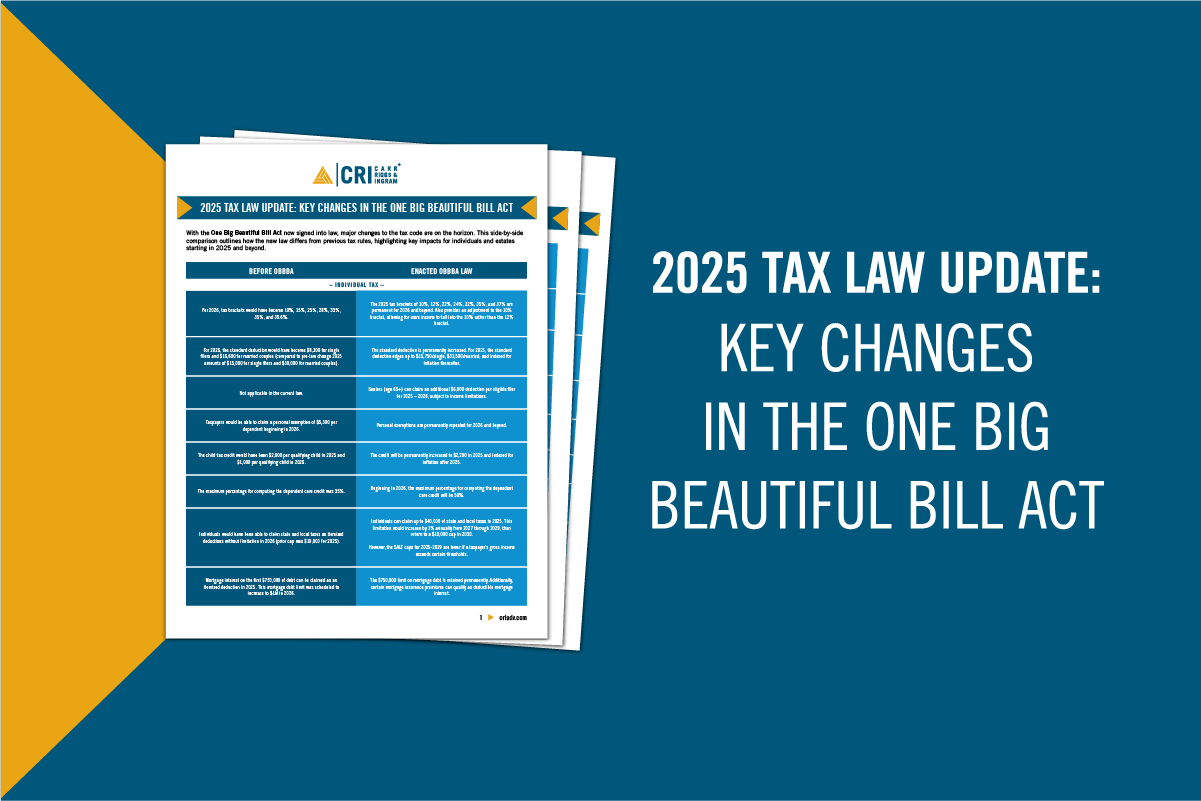
The One Big Beautiful Bill Act (OBBBA) introduced new provisions that could influence how prospective buyers approach your business, and how much of the sales proceeds you keep following a sale. Let’s explore both sides of this equation, then explain why the OBBBA may be a good reason to revisit not only how, but when you plan to exit your business.
Did the OBBBA make your business more attractive to buyers?
The OBBBA doesn’t directly change how your business is valued, but it does change some of the factors buyers consider when evaluating a business. Depending on your industry, entity structure, and a handful of other factors, the OBBBA could influence the metrics that make your company’s financial performance more appealing to buyers.
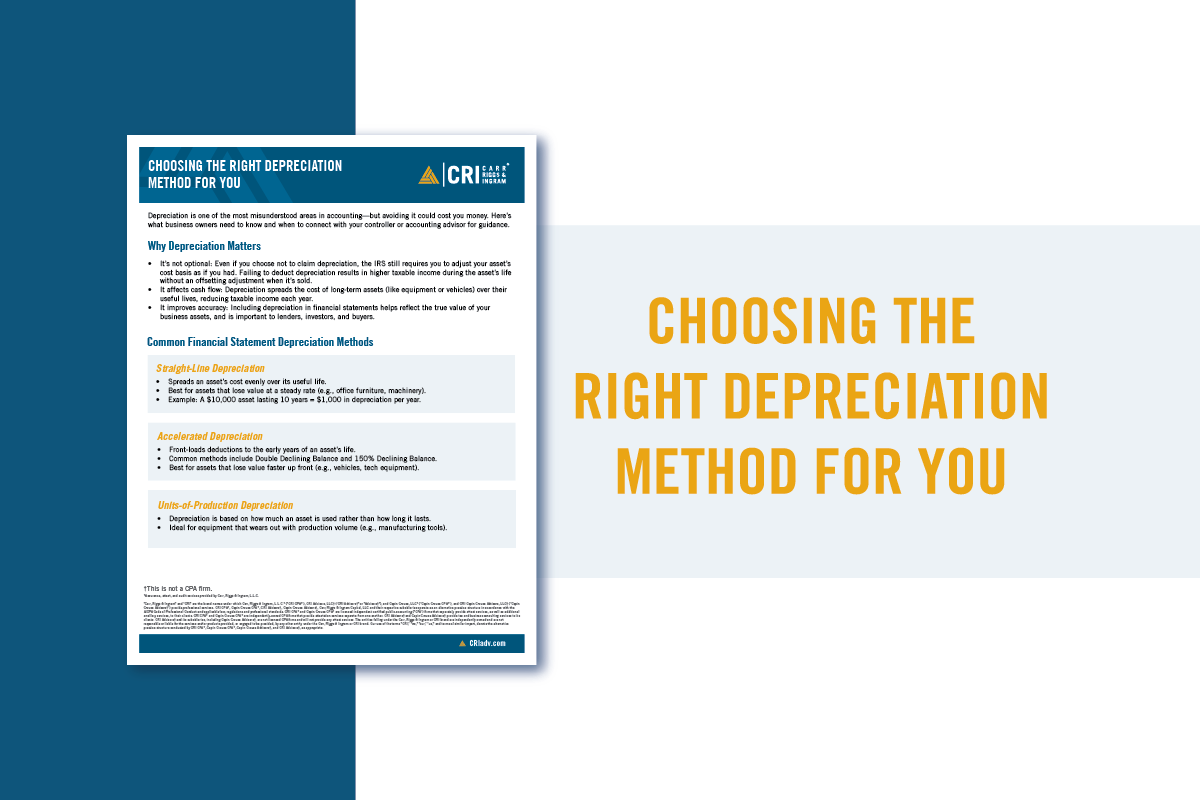
Cash flow is a big one. Several OBBBA provisions may improve after-tax cash flow to the buyer, including the return of 100% bonus depreciation and of immediate expensing of R&D costs. Although these two provisions primarily accelerate deductions rather than create new ones, accelerating deductions can improve short-term cash flow — which is something buyers and appraisers consider when assessing company value.
Consistent with the policy of reducing taxes, OBBA modified the business interest deduction rules under Section 163(j). Its new calculation raises the limitation for many businesses by allowing depreciation and amortization to be added back to the limitation, often allowing larger deductions than were available under prior law, boosting cash flow and making businesses more profitable over time.
While these kinds of changes don’t directly affect EBITDA — which is the most common valuation multiple used by valuation professionals — they can improve after-tax cash flow, which can certainly affect the story you present to buyers.
Will the OBBBA help you keep more of the sales proceeds?
How prospective buyers value your business is only one part of the equation. The other — equally important — part is how much of the sales proceeds you’re able to keep. The OBBBA enhanced several provisions that could reduce the tax cost of exiting your business, or provide better flexibility when transferring wealth following a sale.
Enhanced QSBS Benefits
The OBBBA made it both easier to qualify for the Qualified Small Business Stock (QSBS) gain exclusion, and enhanced its benefits.
- Domestic C Corporations with up to $75 million in gross assets, indexed for inflation, may now qualify (up from $50 million). This test is applied at the time of the issuance of the stock; therefore, the gross assets could be, for example, $750 million at the time of sale and still eligible for QSBS gain exclusion.
- The gain exclusion increased to $15 million (up from $10 million). As such, it is the greater of 10x basis or $15 million, indexed for inflation, for stock issued on or after the date of enactment of OBBA.
- The new tiered holding period allows partial gain exclusions for stock issued on or after the date of enactment of OBBA. The partial exclusion can apply after only three or four years instead of requiring a full five-year holding period but there is an additional cost for what is the “Section 1202 gain” taxed at 28% plus the net investment tax, if applicable.
If your business qualifies, these changes could significantly increase the amount you keep after a sale. For some owners, changing their entity structure so that they qualify for this exclusion can significantly increase the amount they keep after a sale. In fact, CRI is helping many clients evaluate the benefits of converting to a C Corporation to qualify for QSBS treatment.
Enhanced Gift and Estate Tax Exemptions
The OBBBA permanently increased the estate tax exclusion, and the annual gift tax exemption continues to be adjusted upward for inflation.
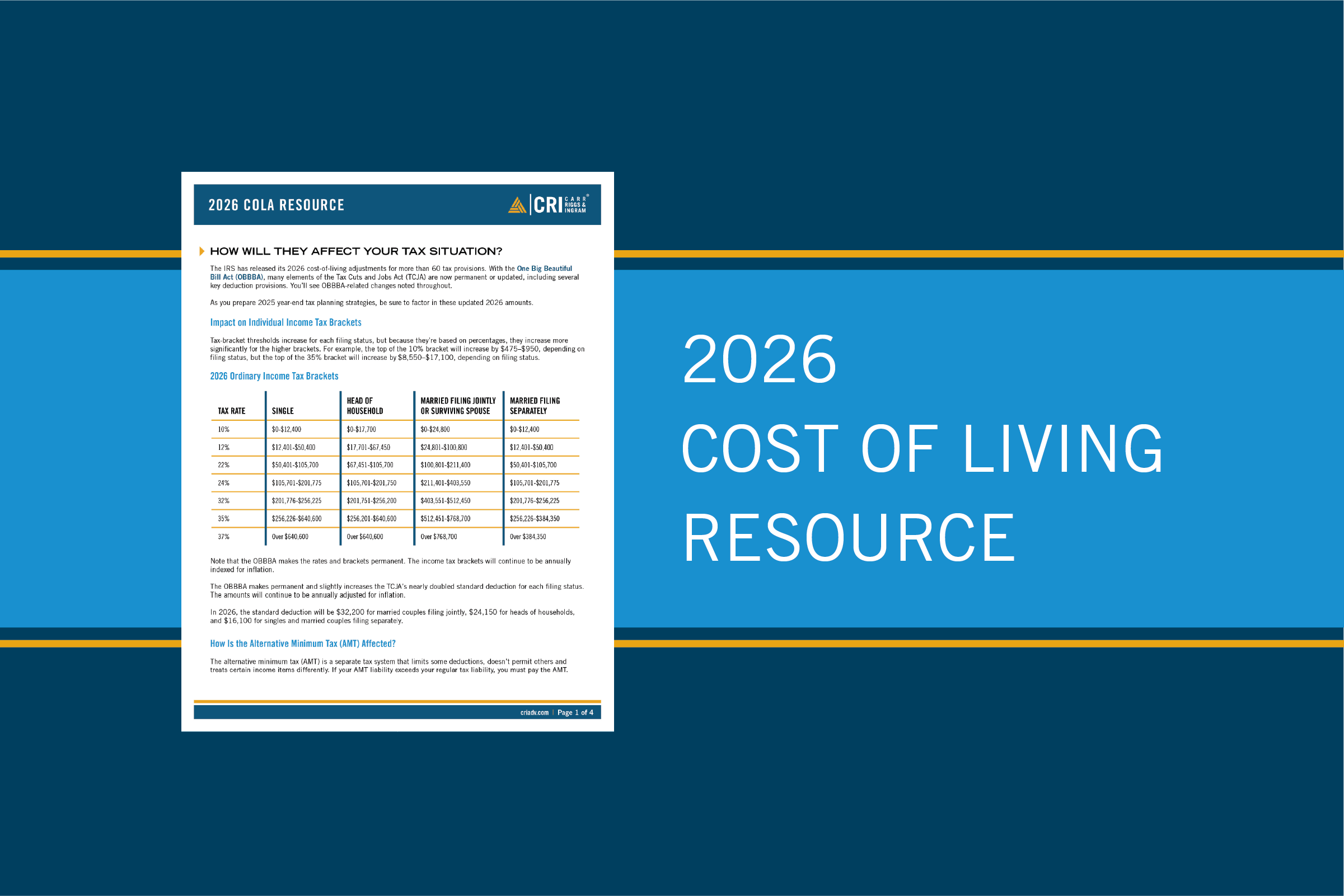
- Annual gift tax exemption: The annual gift tax exemption was adjusted to $19,000 for 2026, letting taxpayers to make present interest gifts up to $19,000 to any number of individuals every single year, with no immediate tax consequences and without chipping away at their lifetime giving allowance.
- Lifetime estate tax exclusion: Estate taxes have been a long-time focus of legislative action, but the current administration both increased the lifetime giving allowance, and made it permanent. The lifetime estate tax exclusion is now $15 million ($30 million for married couples), adjusted upward for inflation starting in 2027.
If you’re seeking a business sale that includes a transfer of wealth — like passing a portion of assets to family members — it’s smart to build the sale into your estate plan sooner rather than later to avoid the assignment of income doctrine. This could significantly reduce (and potentially even eliminate) transfer taxes associated with that sale.
Though the larger and permanent estate tax exclusion doesn’t guarantee a tax-free wealth transfer, it creates more planning opportunities and provides greater flexibility — but you’ll likely need to alter your estate plan to reap the benefits.
Does the OBBBA make you more confident in the timing of your exit?
Unlike many of the tax provisions in the Tax Cuts and Jobs Act of 2017, many of the OBBBA’s business incentives were designed to be permanent. While no tax law is truly ever immune from future congressional action, the absence of a near-term expiration date gives business owners more confidence when making exit plans, and buyers more confidence when making purchasing decisions.
Let’s look at a few ways the OBBBA might make a near-term exit more enticing.
- Your business may be more attractive to buyers.
As we discussed earlier, enhanced tax deductions often lead to improved after-tax cash flow, strengthening your company’s financial profile. This could make you a more attractive candidate than under the prior tax landscape. - You now qualify for enhanced QSBS benefits.
If you now qualify for the Qualified Small Business Stock (QSBS) gain exclusion, the tax savings associated with a sale could make a near-term exiting a more realistic consideration. - Buyers are more confident in the trajectory of your business’s tax position.
Many prospective buyers delay making major purchasing decisions when the tax landscape is uncertain. When the OBBBA made many business tax incentives permanent, it gave buyers a more stable framework under which to evaluate the viability of an acquisition. It’s much easier, for example, to model future cash flows and returns when tax laws aren’t likely to change in the near term. - Estate planning is more predictable.
If your exit plan involves transferring wealth to a family member or other beneficiaries, the permanently increased estate tax exemption provides greater confidence when building it into your estate plan, which could make near-term sales more financially viable. However, for most taxpayers, the increased exemption shifts the focus from wealth transfer tax planning to income tax basis planningshifting(i.e., the basis step-up at death which is one of the few permanent tax benefits available under the tax law).
These laws alone shouldn’t be the only factor when determining exit timing, but their permanency in the tax code — when combined with all other factors that matter — could give you confidence to pursue a different exit timeline.
Should You Revisit Your Exit Plan?
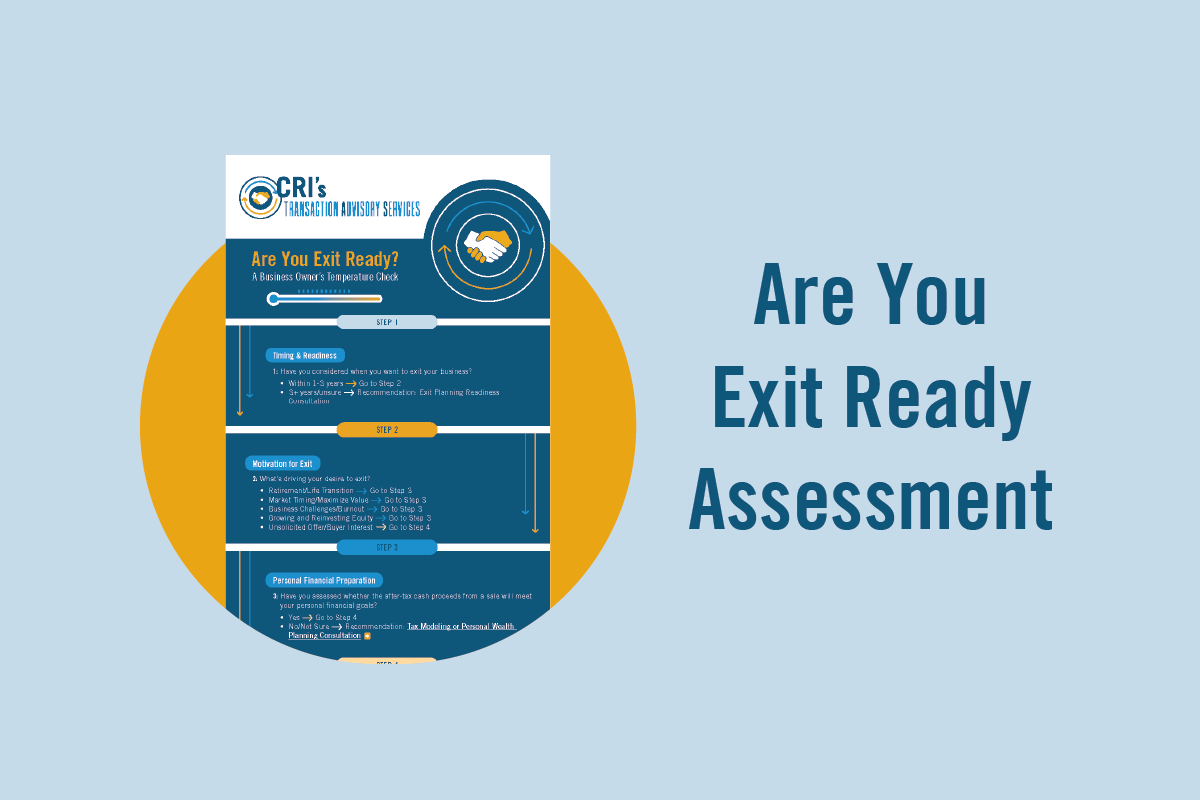
The OBBBA’s provisions should not be the only factors shaping your exit, but together they may provide a reason to reassess your current strategy. A fresh review can help determine whether your timing and approach still align with your personal and financial goals.
Contact your CRI advisor to discuss how the OBBBA may affect your business valuation, after-tax sale proceeds, estate planning considerations, and preferred exit timeline. A coordinated analysis can help identify which provisions are most relevant to your situation and whether your current plan still supports the outcome you want from a future sale.