
Elements of an Effective Gift Acceptance Policy
- Contributor
- Ted R. Batson, Jr.
Apr 16, 2026
A well-crafted gift acceptance policy can help a nonprofit organization serve multiple audiences and purposes at once. It provides clear guidance to fundraising staff as they evaluate charitable gifts, helps donors understand what types of contributions the organization can accept, and addresses potential gifting concerns before they become problems. Having a formal gift acceptance policy in place also allows the organization to answer “yes” to a key inquiry on IRS Form 990, Return of Organization Exempt from Income Tax.
To achieve these goals, your organization’s gift acceptance policy should address several key questions, including:
- How do your fundraising efforts and gift acceptance policy support your organization’s mission and purpose?
- What gifts will you accept?
- Who in your organization is authorized to accept a gift, and what constitutes acceptance?
- What conditions or restrictions will you permit to be placed on a gift?
- How will your organization respond to a donor who wishes to make a gift that is antithetical to your mission or may cause your organization embarrassment?
- How will your organization respond to a gift designated for a purpose that has not been approved by your governing body or other authorized party?
- What conditions must be met before gifts of certain assets will be accepted?
- Which gifts will require a formal gift agreement?
- Who will bear the cost of transfer?
- Who will bear the carrying cost of assets that cannot be liquidated immediately?
- Who will bear the cost of substantiating the value of a gift the donor will claim on their income tax return?
- Who will bear the cost of legal representation?
- When will your organization agree to retain a gift versus liquidating a gift as soon as is practicable?
- What information will be reported in the donation acknowledgment provided to the donor?
- How will a donor’s gift be valued when determining eligibility for membership in giving circles, naming opportunities, or other forms of donor recognition?
- Who in your organization is authorized to sign a donor’s Form 8283, Noncash Charitable Contributions?
- When will a gift be refunded?
- What types of planned gifts or alternative giving techniques will the organization offer and accept?
Integrating Fundraising and Gift Acceptance with Your Mission
For many nonprofits, fundraising is as integral to fulfilling their mission as program activities. It’s not just that money provides the financial resources to accomplish your mission. Rather, there is a direct correlation between communicating your mission and your donors’ passionate response. Fundraising lets inspired donors join you in accomplishing your mission.
For this reason, your gift acceptance policy should be a natural extension of your mission, inviting donors to join you on the journey. As a policy statement, it will set boundaries governing “yeses” and “nos.” Draw these boundary lines carefully to guide donors and staff as they work together to fund your organization’s mission.
Deciding Which Gifts Your Organization Will Accept
Many gift acceptance policies simply identify acceptable gifts based on the nature of the asset offered. However, determining which gifts you should accept involves more than simply deciding which types of assets you are willing to receive. As an initial matter, your gift acceptance policy should determine which officer or officers of your organization are authorized to accept a gift on behalf of your organization.
There are several reasons why this is important:
- A donor may attach a condition or restriction to a gift with which your organization is unwilling or unable to comply.
- A well-meaning donor may offer a gift because of their wish for your organization to start a new program or activity that would be a distraction from your organization’s strategic vision.
- A donor may wish to contribute property that will require substantial operating costs, storage costs, or maintenance expenses to hold until it can be sold.
- A donor may wish for your organization to retain a gift for an extended period for reasons that are unrelated and perhaps detrimental to your mission.
A gift may also be unacceptable for reasons unrelated to the type of gift. Examples include:
- A gift of property that is subject to environmental contamination.
- Gifts that would link your organization to a person or group that would cause your organization embarrassment.
- Gifts that are antithetical to your organization’s mission.
For these reasons, requiring that one or more designated officers review and formally accept certain gifts will ensure that your organization has the opportunity to carefully consider the gift’s impact before accepting it. However, merely appointing such an officer is only part of the equation. Both your donors and your staff should be informed of the requirement that gifts be formally accepted to ensure expectations are set and the policy is observed.
Establishing Guidelines for Planned Gifts
If your organization plans to accept various types of planned gifts, your gift acceptance policy should clearly state which types will be accepted and the parameters under which they will be accepted.
For example, if your organization issues charitable gift annuities, the gift acceptance policy should state:
- The minimum contribution for which a gift annuity will be issued
- How the gift annuity rate will be determined
- In which states the donor may reside before the charity will issue the gift annuity
- What types of assets will be accepted in exchange for a gift annuity
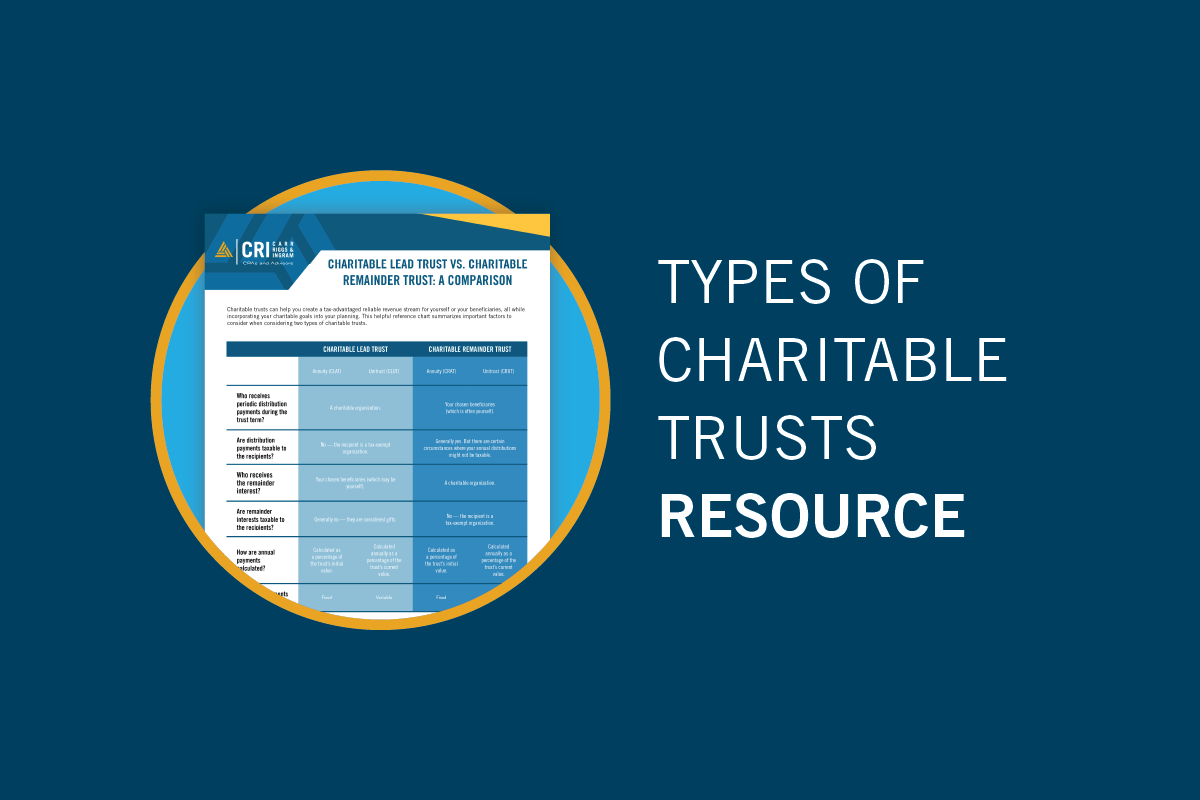
In the case of a charitable remainder trust or charitable lead trust, the gift acceptance policy should state:
- Whether your organization will serve as trustee
- The minimum remainder interest or lead interest fraction upon which your organization is willing to so serve
- The types of assets that may be contributed
- Who is responsible for paying for the drafting of the trust agreement
- Any administrative fee that will be charged
Similar provisions should be incorporated for gifts of life insurance, bargain sales, conservation easements, and gifts of remainder interests in a personal residence, farm, or ranch.
This CRI article on how to enhance your fundraising with planned giving has additional details.
Substantiating the Donor’s Gift
A donor is required to obtain a contemporaneous acknowledgment of any contribution in excess of $250. Accordingly, your organization should provide the donor a letter acknowledging receipt of the contribution that includes the following elements:
- The name of the exempt organization that received the gift.
- The date of the gift.
- A description of the property contributed in sufficient detail to identify it with specificity. This may be the legal description of real property, the number of shares of stock or units in a business, a photograph and narrative description of a work of art, or other similar means of identifying with specificity the property contributed.
- A statement of the dollar value of any benefit given to the donor in exchange for the gift. Alternatively, the statement may say that the only benefits received by the donor were intangible religious benefits.
If the donor’s noncash gift has a value in excess of $5,000 (not including securities valued on an exchange), the donor must obtain an appraisal and include Form 8283 with their return. For contributions between $500 and $5,000, the donor is required to include Form 8283 but is not required to obtain an appraisal. When a donor’s noncash gift is greater than $5,000 and requires a qualified appraisal, the exempt organization is also required to sign the donor’s Form 8283. Your gift acceptance policy should designate the officer responsible for signing this form. Because signing a Form 8283 may trigger a requirement that your organization file Form 8282, Donee Information Return, a copy of any signed Form 8283 should be provided to your organization’s finance department.
Strengthening Fundraising Through Clear Gift Guidelines
A gift acceptance policy is an integral component of a nonprofit’s best-practices framework. By establishing clear standards and procedures for evaluating and accepting charitable gifts, your organization can support staff decision-making, set appropriate expectations for donors, and reduce the likelihood of misunderstandings or other issues.
When thoughtfully drafted and consistently applied, a gift acceptance policy promotes efficiency, transparency, and confidence, helping your organization steward contributions responsibly while strengthening donor trust.
CRI offers services to help guide you in this area. Please contact our nonprofit specialists to learn more.